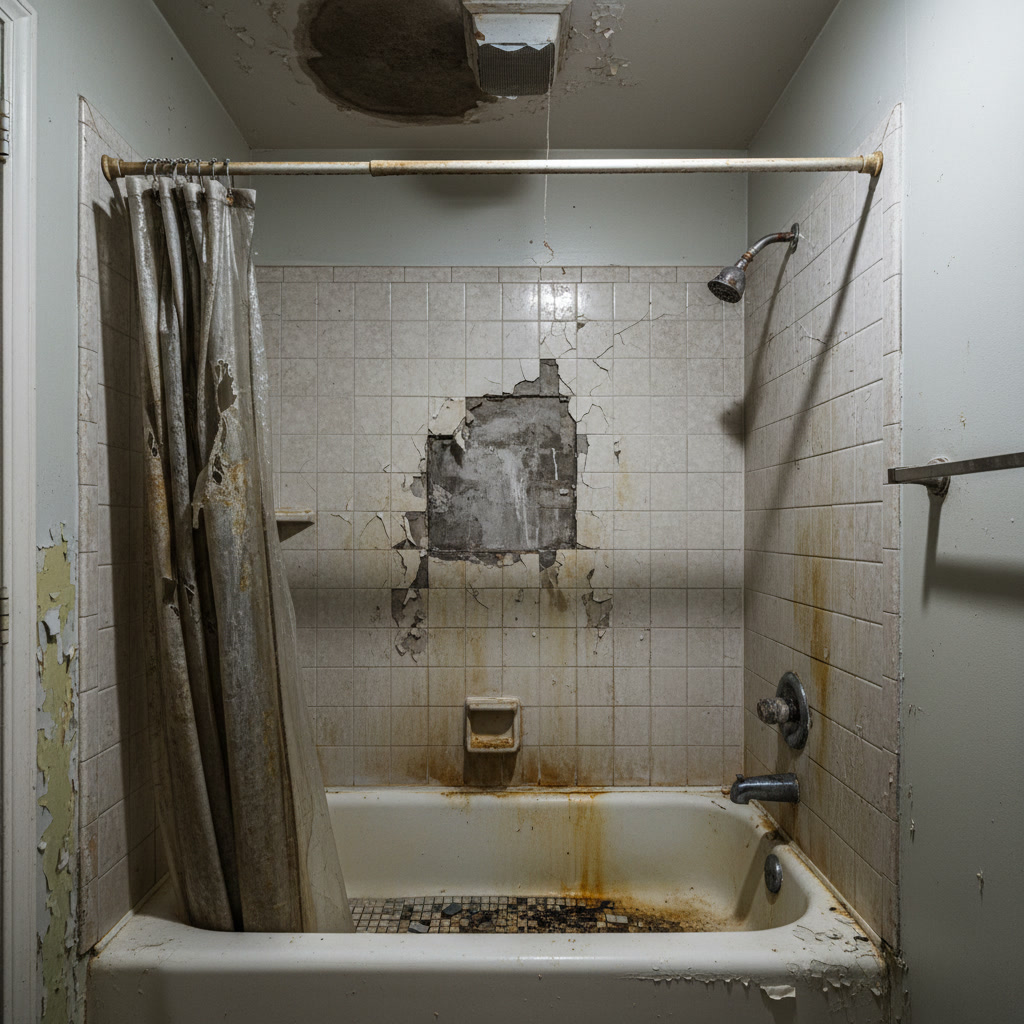
A shower that constantly drips, shows spreading mold, or feels unstable underfoot has moved past the point where small fixes make financial sense. When your shower needs remodel work instead of another round of caulk and temporary patches, the signs become clear: recurring water damage, outdated plumbing that fails inspections, and structural issues that compromise safety. Recognizing these indicators helps you invest in lasting solutions rather than throwing money at problems that will return within months.
Why Quick Fixes Stop Working After Years of Use
Most showers built 15 to 20 years ago used materials and installation methods that have reached the end of their service life. Grout deteriorates, tile adhesive loses its bond, and waterproofing membranes break down from constant exposure to moisture and temperature shifts. When you repair one leak only to discover another in a different corner two months later, the underlying system has failed.
The difference between a repairable shower and one requiring complete replacement comes down to the scope of deterioration. Surface-level issues like a single cracked tile or loose showerhead mount can be fixed. Systemic problems involving multiple components, hidden water intrusion, or compromised structural elements require starting fresh.
Water Damage That Extends Beyond the Shower Pan
Visible water stains on the ceiling below your bathroom or warped flooring outside the shower threshold indicate moisture has escaped the intended drainage system. This type of damage rarely stays contained. Water follows the path of least resistance through subfloors, wall cavities, and structural framing.
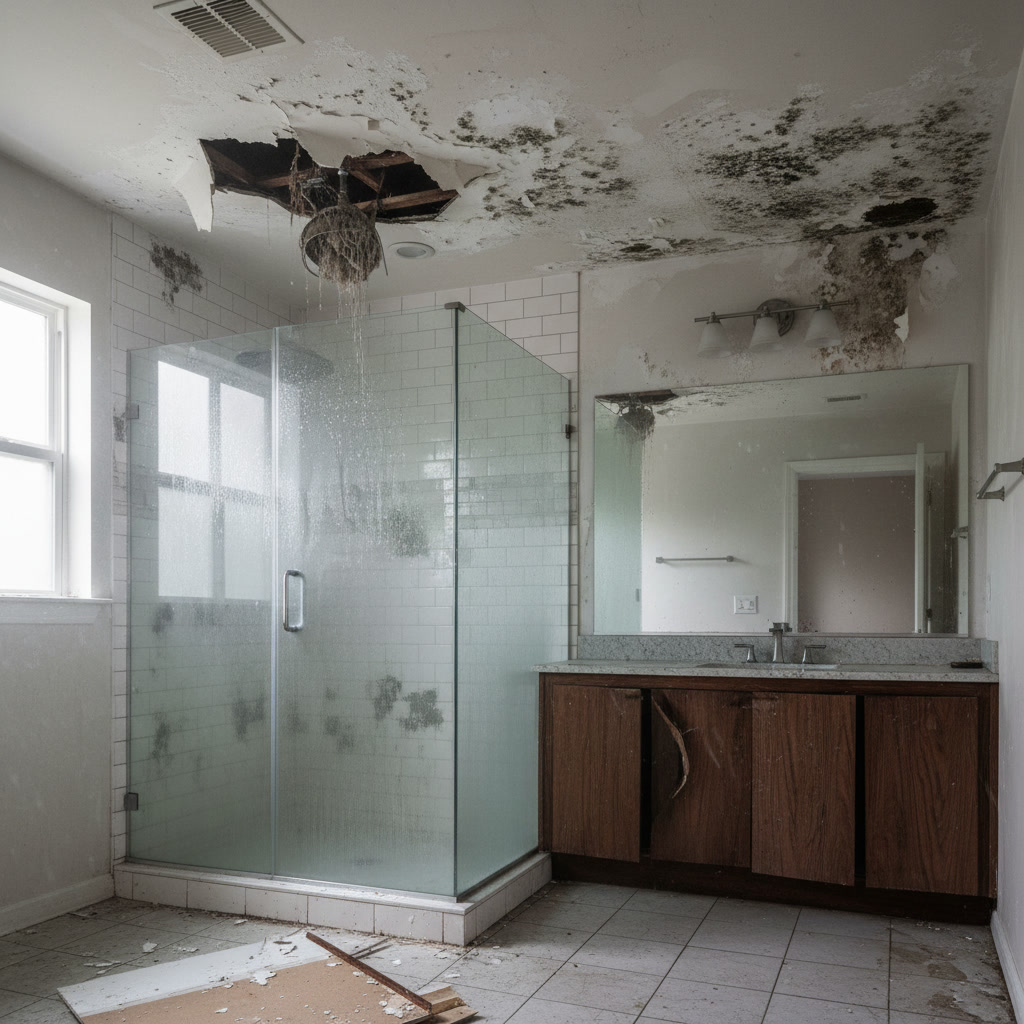
If you notice soft spots in the floor near the shower, discoloration spreading across walls, or a persistent musty odor that returns after cleaning, water has been migrating for months or years. At this stage, repairs must address not just the shower itself but also damaged framing, insulation, and subfloor materials. The cost and disruption of fixing hidden damage while leaving an old shower in place makes full replacement the logical choice.
Persistent Mold Growth That Returns After Cleaning
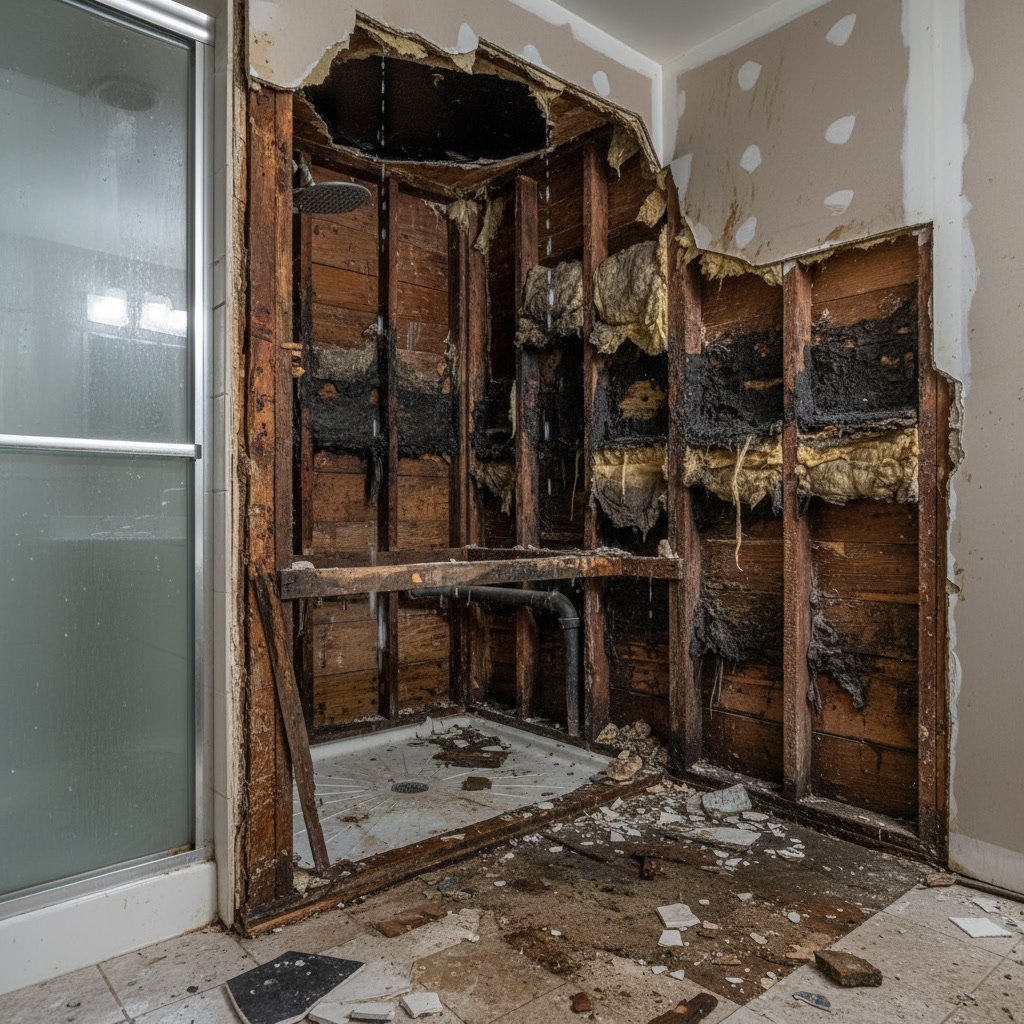
Mold that reappears in the same grout lines or corners within weeks of aggressive scrubbing signals a moisture source behind the surface. Surface mold can be cleaned. Mold that grows from within wall cavities or beneath tile cannot be permanently removed without eliminating the moisture source and replacing contaminated materials.
Black or green stains that spread despite regular maintenance indicate failed waterproofing. Grout is porous and eventually allows water to seep through to backing materials. Once drywall, wood framing, or insulation becomes saturated and hosts mold colonies, no amount of surface treatment will solve the problem. These conditions are especially common in Acadiana homes where high humidity accelerates material breakdown.
Outdated Plumbing That Fails Modern Standards
Older shower valves often lack pressure-balancing or thermostatic controls, creating scalding risks and code violations. Galvanized pipes corrode internally, reducing water pressure and introducing rust particles into your water supply. Mixing valves installed before 2006 may not meet current anti-scald regulations.
Upgrading plumbing while keeping the existing shower surround rarely makes sense. Opening walls to replace valves and supply lines creates opportunities to install modern shower systems with better drainage, improved waterproofing, and fixtures that meet current efficiency standards. Doing the work in stages doubles labor costs and extends disruption.
Cracked or Flexing Shower Base
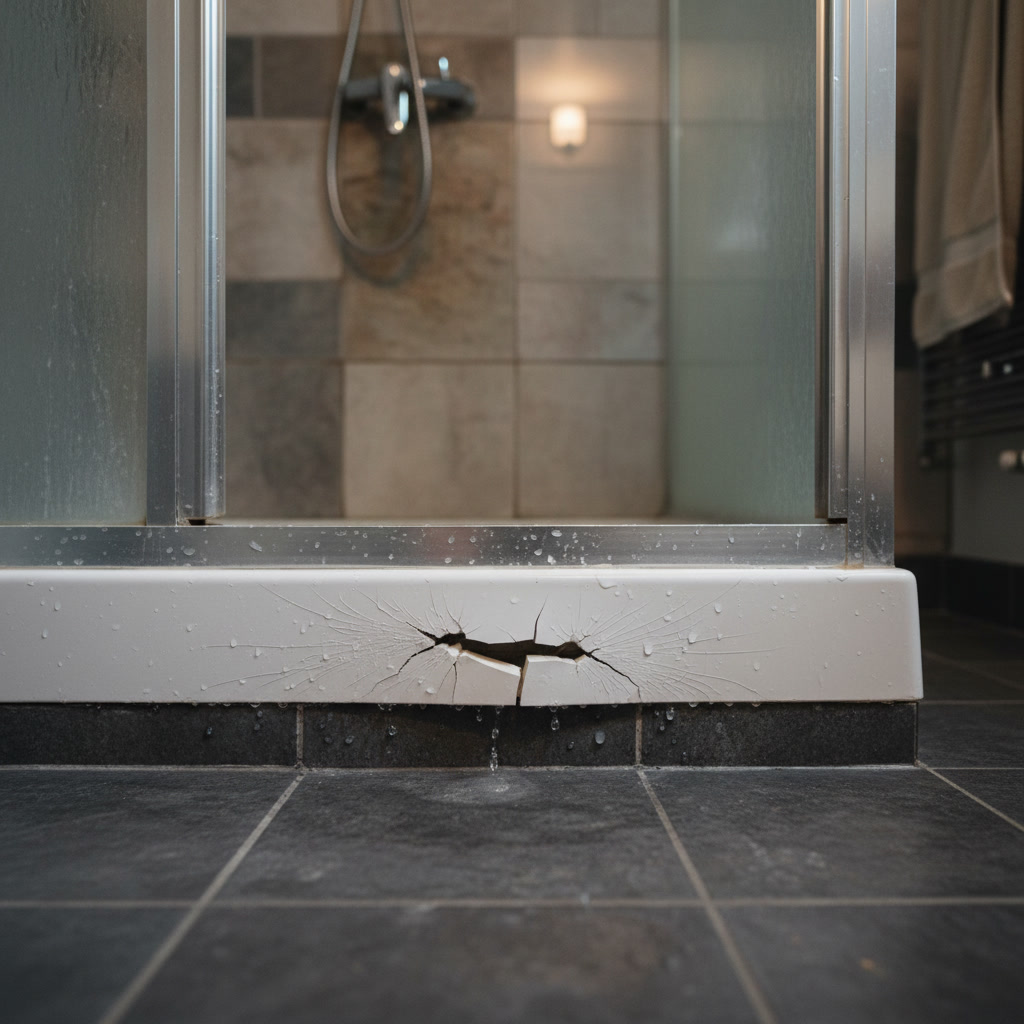
A shower pan that moves underfoot or shows hairline cracks has lost structural integrity. Fiberglass and acrylic bases flex when improperly supported during installation. Years of use widen initial stress points into visible cracks that leak water into the subfloor.
Once a shower base cracks, repair compounds provide only temporary relief. The underlying cause – inadequate support, shifting foundation, or material fatigue – remains. Water intrusion through cracks compromises joists and subfloor, creating safety hazards and requiring structural repairs that dwarf the cost of a new shower installation.
Five Clear Indicators Your Shower Has Reached Replacement Stage
Recognizing the tipping point between repair and replacement requires evaluating multiple factors together. Any single issue might warrant a targeted fix, but combinations signal systemic failure:
- Multiple leak sources that have required three or more repair attempts in the past two years
- Visible rust or corrosion on fixtures, drain assemblies, or exposed piping
- Grout that crumbles when touched or has gaps wider than one-eighth inch
- Tiles that sound hollow when tapped, indicating separation from the substrate
- Shower door tracks that no longer seal properly despite hardware replacement
When two or more of these conditions exist simultaneously, the cumulative repair cost approaches 60 to 70 percent of a full replacement. At that threshold, investing in a complete bathroom remodel delivers better long-term value.
Accessibility Needs That Minor Modifications Cannot Address
Standard tub-shower combinations with high thresholds create barriers for anyone with mobility limitations. Installing grab bars on deteriorating tile or attempting to lower a curb on an existing shower pan rarely meets safety requirements or provides adequate support.
True accessibility requires proper reinforcement behind walls, slip-resistant flooring rated for wet conditions, and barrier-free entry designed into the layout. A walk-in tub installation or curbless shower demands structural changes that make piecemeal modifications impractical. Planning accessibility features from the ground up ensures they function safely under real-world use.
Why Proper Installation Matters More Than Product Quality
The best shower materials fail when installed incorrectly. Waterproofing membranes must overlap properly at seams. Drain assemblies require precise slope for complete water evacuation. Backer board needs correct fastener spacing and seam treatment to prevent movement.
Many shower failures stem not from product defects but from installation shortcuts. Skipping the waterproof pan liner, using drywall instead of cement board, or failing to slope the mortar bed creates conditions where even premium tiles and fixtures will fail within years. Understanding why bathroom remodels fail in high humidity climates highlights how environmental factors amplify installation mistakes.
This reality makes contractor selection as important as product choice. Accurate measurement, proper substrate preparation, and installation techniques that account for material expansion and contraction determine whether your shower performs for two decades or requires repairs within two years.
The Hidden Cost of Delaying Necessary Work
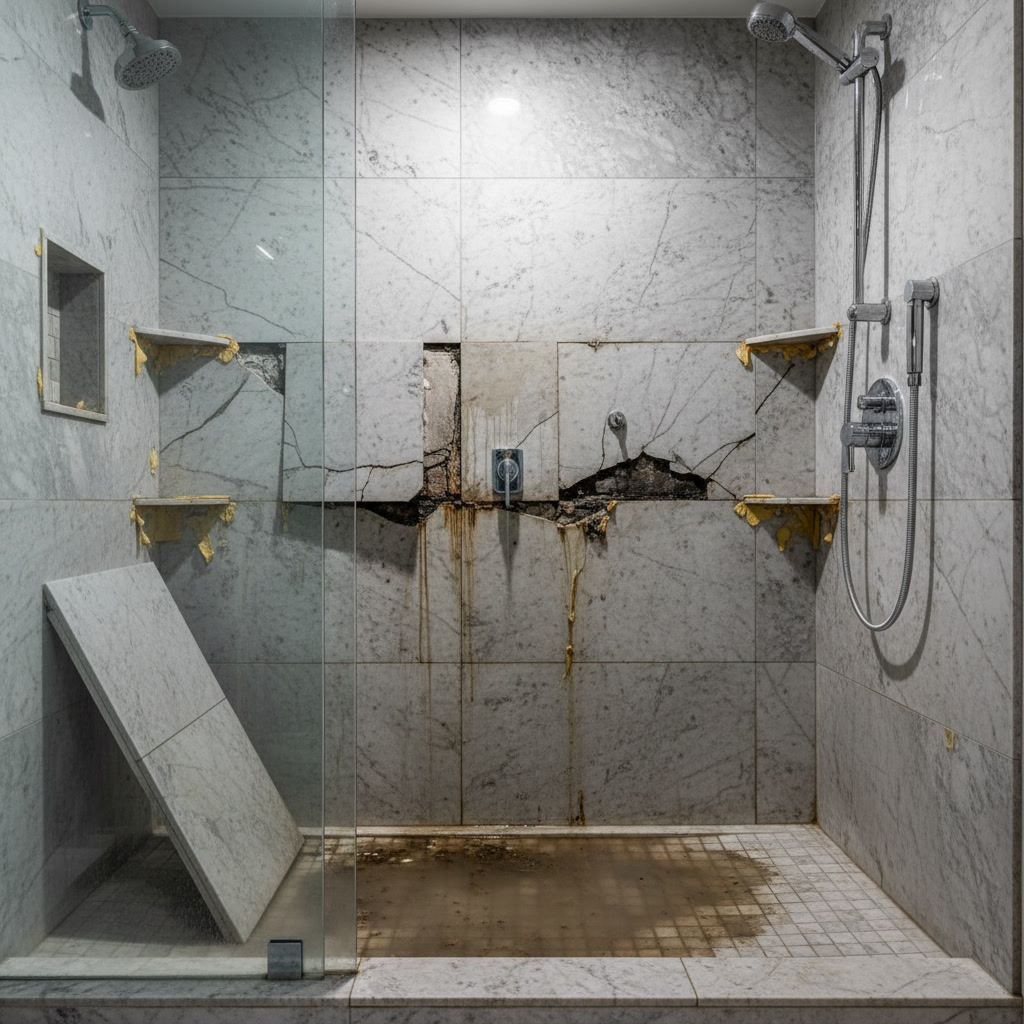
Every month a failing shower remains in service, water damage spreads. A leak that starts behind one tile eventually compromises adjacent areas. Mold colonies grow exponentially once established. Structural wood exposed to moisture loses load-bearing capacity.
Homeowners who delay full replacement often spend thousands on temporary fixes that address symptoms rather than causes. By the time they commit to proper replacement, additional structural repairs add 30 to 50 percent to the project cost. Early intervention when warning signs first appear limits damage to the immediate shower area.
How Full Replacement Differs From Surface Refinishing
Surface refinishing products coat existing tile and fixtures with epoxy or acrylic coatings. These treatments update appearance but do nothing to address underlying leaks, failed waterproofing, or structural issues. Refinishing makes sense only when the shower structure remains sound and the goal is purely cosmetic.
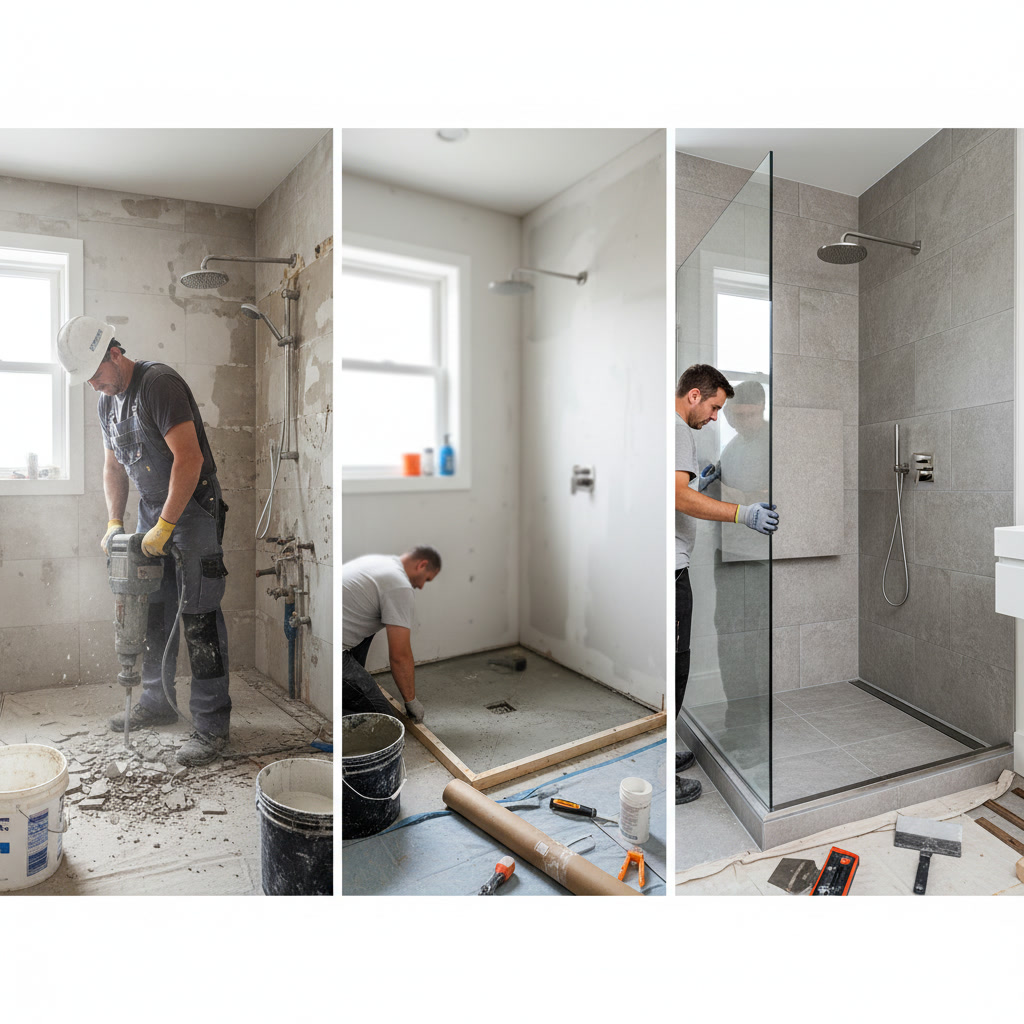
Full replacement removes all components down to the studs and subfloor. This approach allows inspection and repair of hidden damage, installation of modern waterproofing systems, and upgrading of plumbing to current codes. Complete bathtub replacement follows similar principles, creating a watertight system built to perform rather than simply covering problems with a fresh coat.
The process involves more disruption but delivers measurably better results. Learning how bathroom remodeling works from planning to final walkthrough helps set realistic expectations about timeline and scope.
Making the Right Decision for Your Home
Evaluating whether your shower requires full replacement starts with honest assessment of current conditions. Document every issue: take photos of cracks, measure soft spots in flooring, note how quickly mold returns after cleaning. This inventory reveals patterns that indicate systemic failure versus isolated problems.
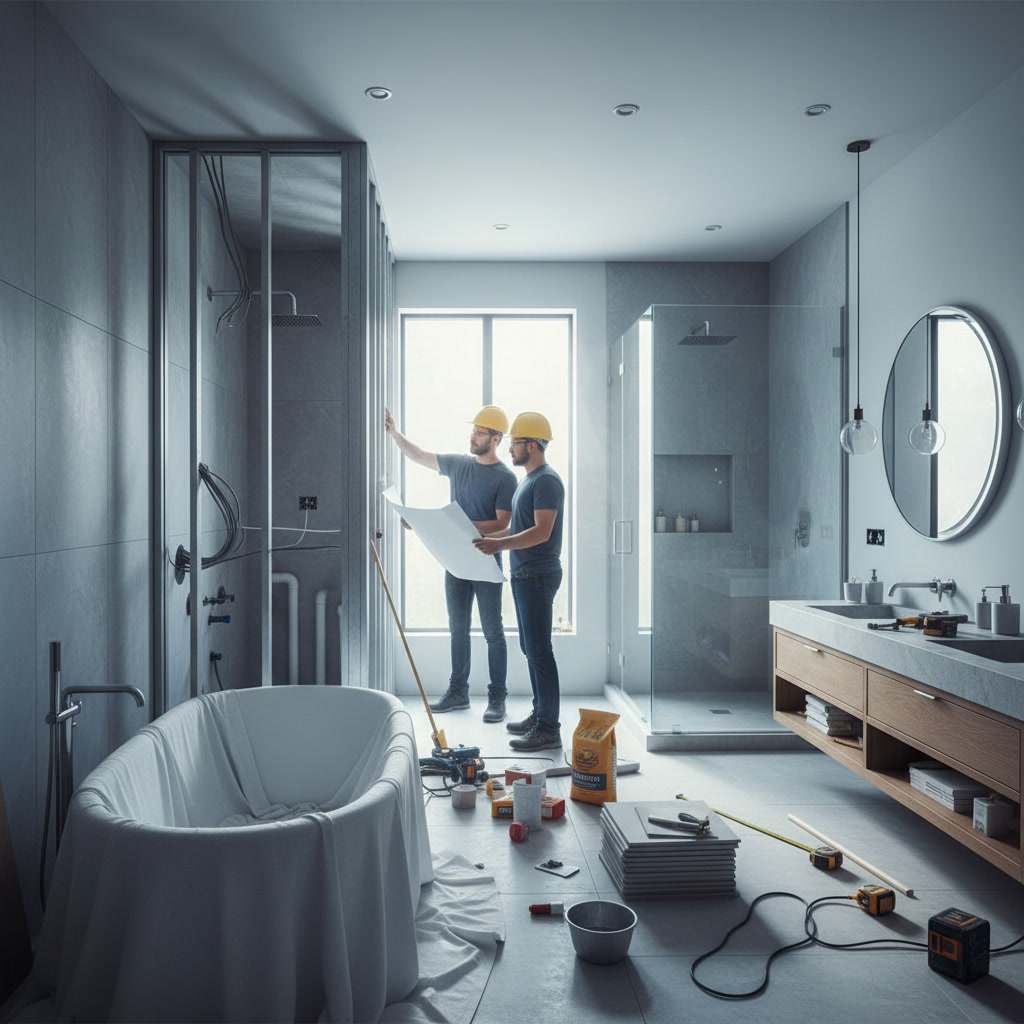
Request inspection from qualified professionals who can assess conditions behind walls and beneath the shower pan. Thermal imaging cameras detect moisture in hidden cavities. Probing subfloors identifies areas where water has compromised structural integrity. Armed with complete information about the true scope of damage, you can make decisions based on facts rather than hoping temporary fixes will hold.
Quality installation matters more than brand names or trendy finishes. A correctly installed mid-range shower system outperforms premium products installed with shortcuts. The difference shows up not in the first year but in decades of reliable, leak-free performance that protects your home’s structure and your family’s health.
Acadiana Bath Concepts has built its reputation on proper installation that performs long after project completion. When you recognize the signs that temporary fixes no longer make sense, connecting with experienced professionals who understand both the technical requirements and the local climate conditions ensures your investment delivers lasting value. Reach out to discuss your specific situation at +1 (337) 264-25853 and get straightforward answers about the best path forward for your home.